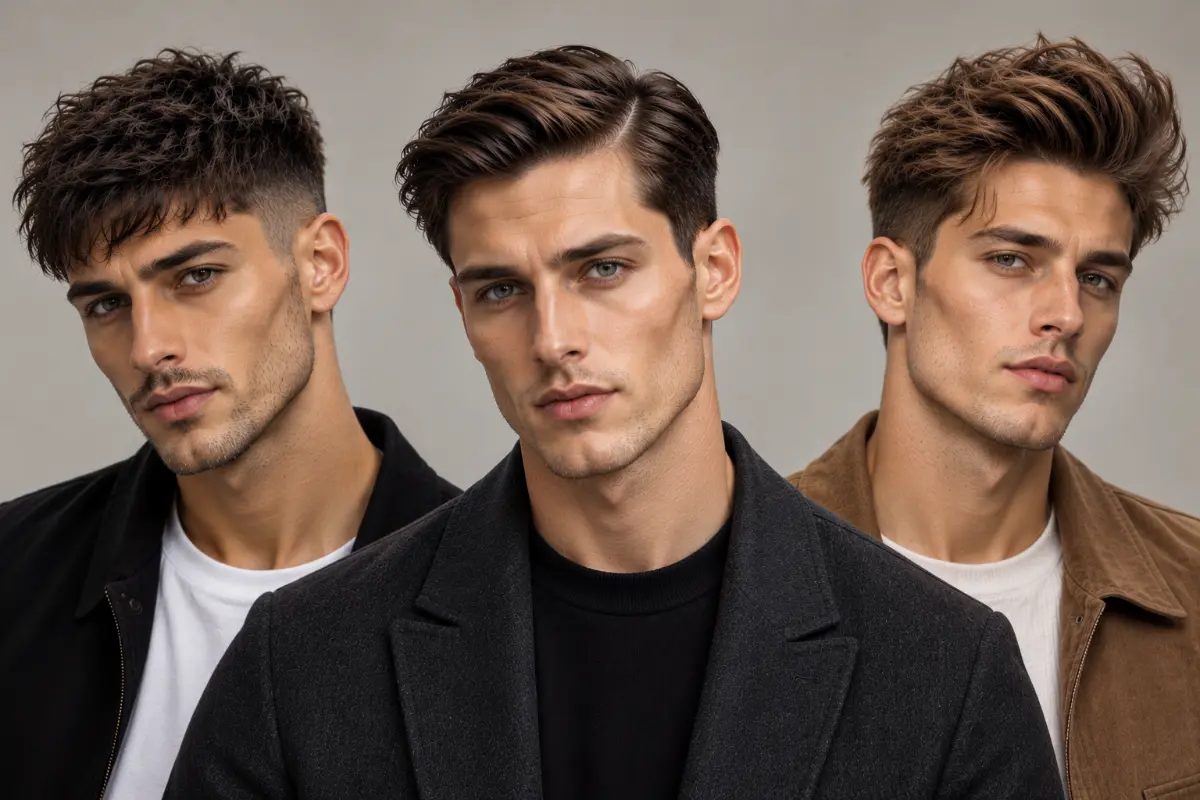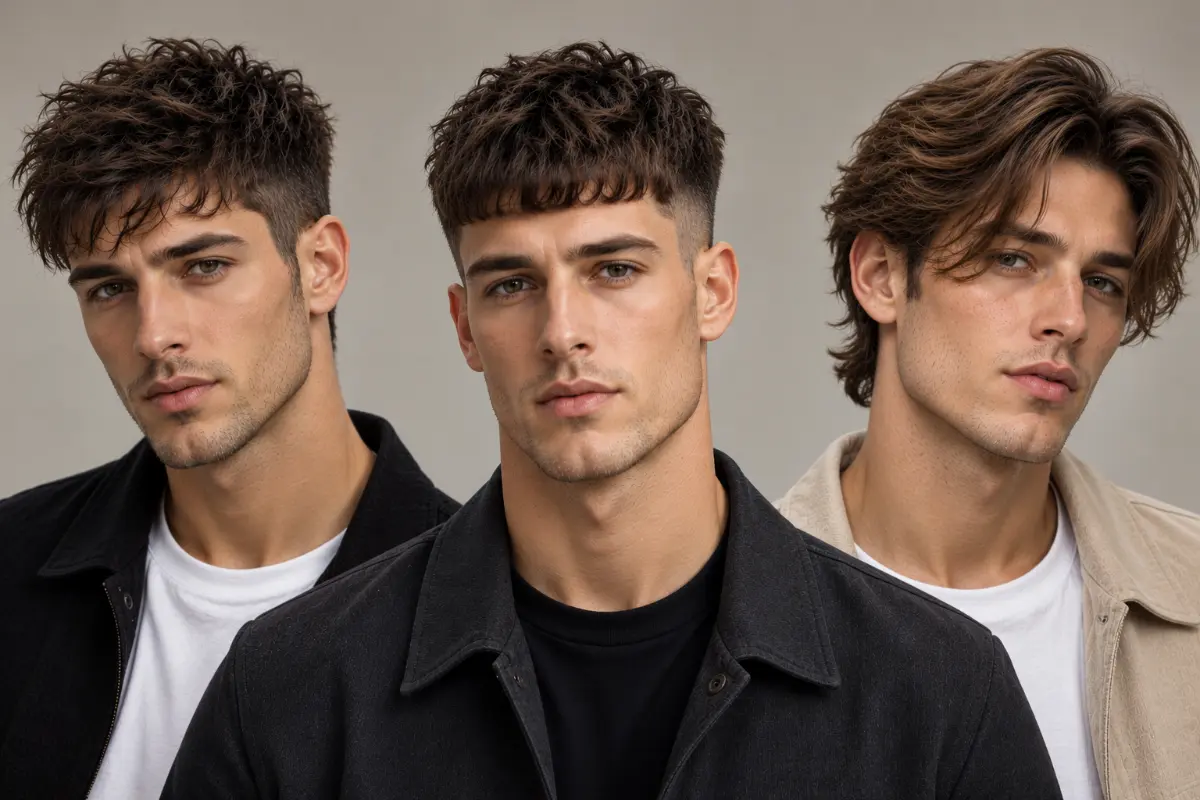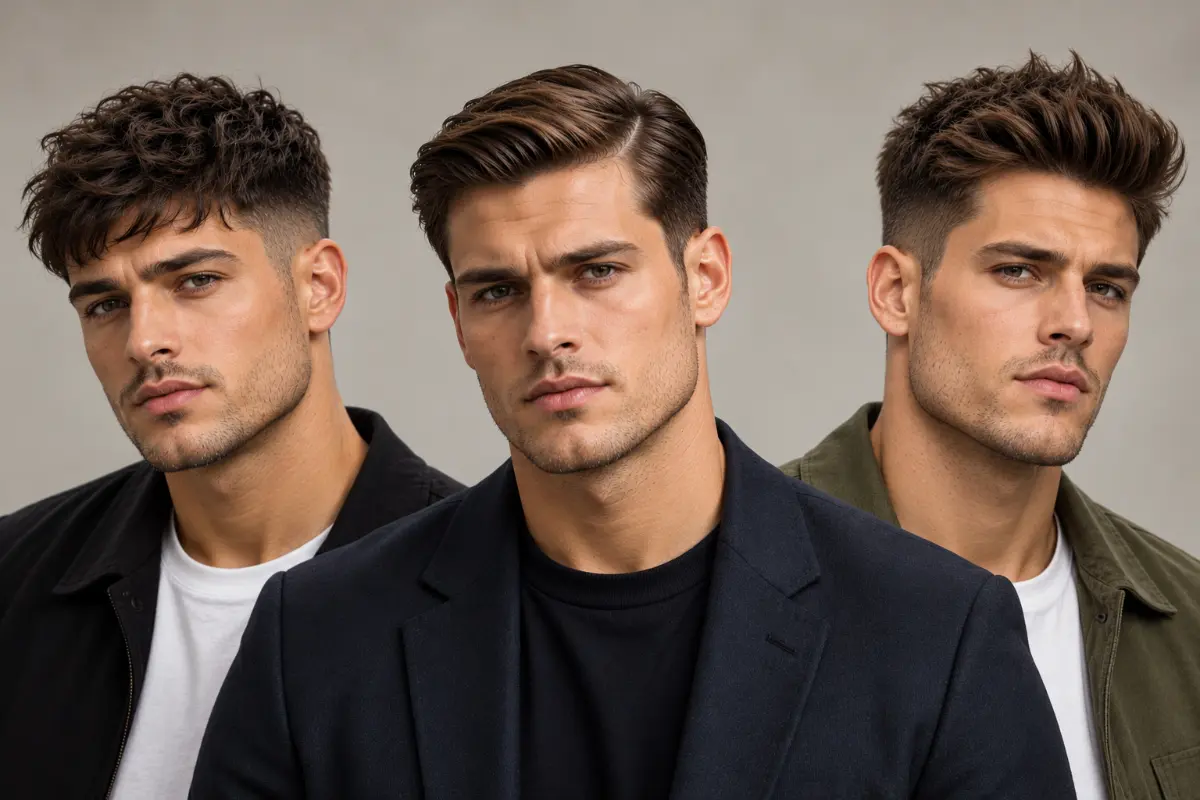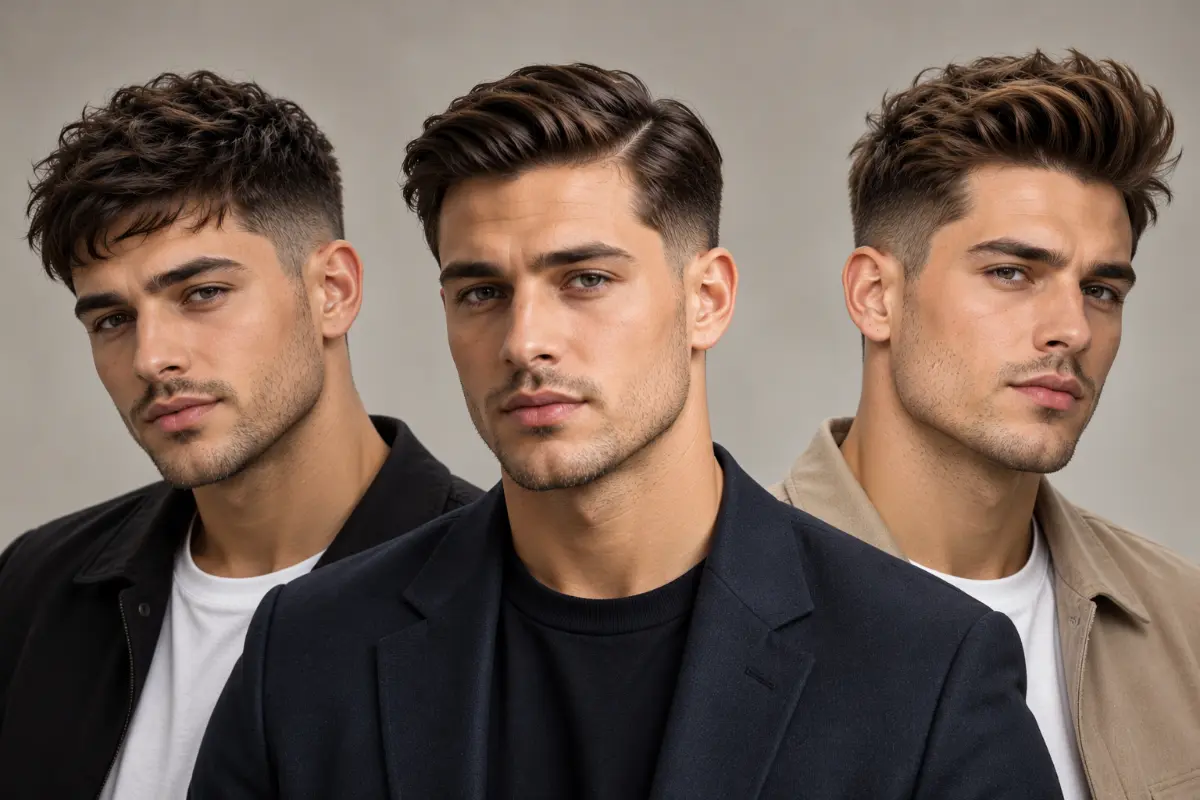

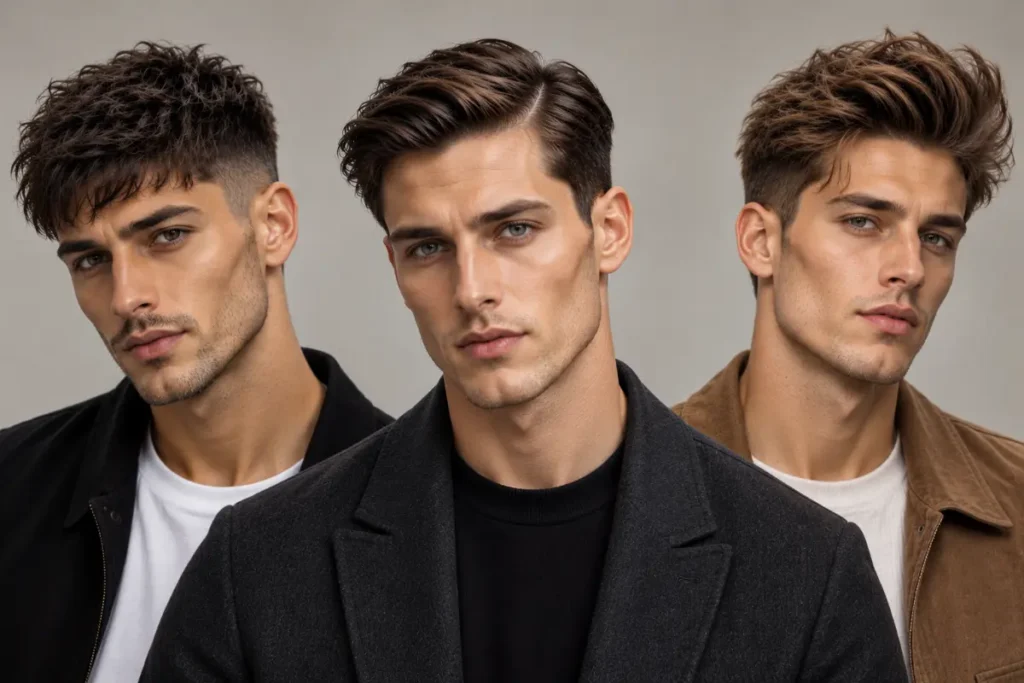
Quick answer: The best diamond face shape haircuts for men include the textured crop, French crop, side part, soft quiff, curtain hairstyle and layered medium-length cut. A diamond face is typically widest at the cheekbones, with a narrower forehead and jawline. Hairstyles with a textured fringe, gentle volume around the forehead or natural fullness at the sides can create a balanced appearance. The right choice depends on your hair type, preferred length and personal style.
Prominent cheekbones can give a diamond face a distinctive, angular appearance. The key to choosing a haircut is understanding how the top, sides and fringe change the overall silhouette.
Some men prefer to highlight their cheekbones with a short, clean haircut. Others want a softer outline, with a fringe or layers that frame the forehead and temples. Both approaches can work.
Whether you prefer a low-maintenance crop, a classic side part, naturally curly hair or a medium-length style, there are several options worth considering.
This guide covers 15 of the best diamond face shape haircuts for men, how to identify your face shape, advice for different hair types, barber instructions and answers to frequently asked questions.
How to Tell If You Have a Diamond Face Shape
A diamond face is generally widest at the cheekbones. The forehead and jawline are narrower in comparison, and the chin may be relatively pointed.
Look for these common features:
- Prominent cheekbones: The cheekbones are usually the widest part of the face.
- A narrower forehead: The forehead may taper inwards towards the hairline.
- A narrower jawline: The lower face typically narrows towards the chin.
- An angular outline: The cheekbones and chin can create a more defined facial shape than a rounded face.
- A tapered chin: The chin may appear pointed, although this varies from person to person.
To assess your face shape, take a front-facing photograph with your hair pulled away from your forehead. Compare the width of your forehead, cheekbones and jawline. Look at the overall outline rather than relying on one feature alone.
You do not need exact measurements. Face-shape categories are practical styling guides, and many people have a combination of features rather than one perfectly defined shape.
Diamond Face vs Oval Face vs Heart Face vs Square Face
| Face shape | Typical characteristics | Haircut considerations |
|---|---|---|
| Diamond | Widest at the cheekbones, with a narrower forehead and jaw | Consider fringe styles, soft layers and natural fullness around the temples |
| Oval | Longer than wide, with a gently curved jaw and balanced proportions | Many short, medium and long hairstyles can work |
| Heart | Wider forehead, narrower lower face and often a pointed chin | Consider styles that balance the forehead and lower face |
| Square | Similar width across the forehead, cheekbones and jaw, with an angular jawline | Structured cuts or textured styles can complement the strong outline |
The distinction between diamond and heart shapes is particularly useful. A diamond face is generally widest at the cheekbones, whereas a heart-shaped face is usually widest around the forehead.
For a wider overview, visit our complete guide to face shape haircuts for men.
What Makes a Haircut Suit a Diamond Face?
There is no haircut that every man with a diamond face must choose. Instead, consider how different styles affect the forehead, temples, cheekbones and jawline.
1. Add movement around the forehead
A textured fringe, side-swept front or soft quiff can draw attention to the upper part of the face. These styles are worth considering if you want to create a little more visual width around a narrower forehead.
2. Avoid unnecessary bulk at the widest point
If your cheekbones are particularly prominent, very wide or bulky hair around the upper sides may make the silhouette feel crowded. A well-shaped cut can retain enough fullness for balance without adding excessive bulk.
3. Use texture to soften angular features
Choppy layers, natural waves and a relaxed fringe can break up rigid lines. You can achieve this with a short crop or a longer layered style.
4. Choose the right amount of side length
Very tight sides create a strong contrast with the cheekbones. A low taper or scissor-cut side may provide a softer transition if that is the effect you want.
A high fade can still be a good choice if you prefer a sharper, more defined style. The result depends on the fade height, top length and overall proportions.
5. Consider the jawline and chin
A haircut changes the frame around the face, but facial hair can also affect the appearance of the lower face. If you wear a beard, its length and outline may influence the overall result.
The goal is not to conceal your cheekbones. It is to choose a style that makes you feel comfortable and suits your preferred look.
15 Best Diamond Face Shape Haircuts for Men
1. Textured Crop
The textured crop is a versatile choice for men with diamond faces. It combines a short top with choppy layers and a fringe that can be directed forwards or slightly to one side.
The sides can be tapered or faded, depending on your preference. A softer taper is a good starting point if you want to retain some fullness around the temples.
Why it works: The textured fringe introduces movement around the forehead, while the short shape remains neat and manageable.
Best for: Straight, thick or slightly wavy hair, particularly if you want a contemporary style with relatively simple maintenance.
How to style it: Work a small amount of matte paste or clay through dry hair. Use your fingers to separate the layers and direct the fringe naturally.
What to ask your barber: “A textured crop with choppy layers, a soft forward fringe and a low taper. Keep the finish natural and avoid making the sides excessively tight.”
2. French Crop
The French crop features a short top and a fringe that sits across the forehead. It can have a blunt outline or a more broken-up, textured finish.
This is a practical option if you want a clean haircut without needing to create much height at the front.
Why it works: The fringe brings attention to the forehead, while the textured top keeps the hairstyle from looking too rigid.
Best for: Straight, thick or slightly wavy hair. Curly hair can also work with a version tailored to the natural curl pattern.
How to style it: Apply a small amount of matte styling product and direct the hair forwards. Keep the fringe separated rather than flattening it into a solid block.
What to ask your barber: “A French crop with a textured fringe, a natural taper and enough length on top for movement. Keep some softness around the temples.”
3. Side Part With Natural Volume
The classic side part is a timeless choice for professional and casual settings. The hair is left long enough to part naturally, while the sides can be tapered or scissor-cut.
For a diamond face, a little sideways movement through the top can create a balanced frame without requiring excessive height.
Why it works: The diagonal parting introduces asymmetry and gives the upper part of the hairstyle a defined direction.
Best for: Straight or slightly wavy hair, especially if you prefer a smart, polished appearance.
How to style it: Use a lightweight cream or flexible pomade. Comb the hair across from your natural parting, keeping the finish soft rather than overly slick.
What to ask your barber: “A classic side part with natural volume, a soft taper and enough length to style across. Please keep the shape balanced rather than making the sides skin-tight.”
4. Soft Quiff
A soft quiff lifts the front of the hair while keeping the overall shape flexible and natural. It is less rigid than a traditional high quiff and can be styled with a small amount of texture.
Why it works: The front lift draws attention towards the forehead, while the softer finish avoids creating an excessively severe outline.
Best for: Straight and wavy hair with enough length at the front to create lift.
How to style it: Blow-dry the front gently upwards and slightly to the side. Finish with a small amount of matte paste or cream.
What to ask your barber: “A soft textured quiff with moderate front volume, natural movement and tapered sides. Avoid an exaggerated height or a very tight fade.”
5. Side-Swept Fringe
A side-swept fringe directs the hair diagonally across the forehead. It can be short and subtle or longer and more relaxed.
This style works well if you want the movement of a fringe without the more uniform appearance of a blunt crop.
Why it works: The diagonal direction frames the forehead and introduces a softer line around angular features.
Best for: Straight and wavy hair, particularly if the front naturally falls to one side.
How to style it: Apply a lightweight styling cream to slightly damp hair. Direct the fringe across the forehead using your fingers or a comb.
What to ask your barber: “A side-swept fringe with textured layers and a low taper. Leave enough length at the front for a natural diagonal sweep.”
6. Textured Fringe With Tapered Sides
This hairstyle combines a textured top with a fringe that falls forwards, while the sides are tapered rather than clipped extremely short.
It is a good option if you want a modern look with a little more softness than a high-contrast fade.
Why it works: The fringe creates movement around the forehead, and the tapered sides provide a clean outline without removing too much hair from the temples.
Best for: Straight, wavy and thick hair.
How to style it: Use a matte paste to define individual sections. Keep the fringe flexible so that it moves naturally.
What to ask your barber: “A textured fringe with a low taper, choppy layers on top and some natural length around the temples.”
7. Ivy League Haircut
The Ivy League is a slightly longer version of the crew cut. It leaves enough length on top for a subtle side part or a small amount of lift.
It is an excellent option if you want a smart, easy-to-manage hairstyle without committing to a longer quiff.
Why it works: The top offers enough flexibility to style the hair across or slightly forwards, while the clean outline keeps the look polished.
Best for: Straight or lightly wavy hair and men who prefer a professional appearance.
How to style it: Use a small amount of lightweight cream and comb the top into place. Keep the finish natural rather than rigid.
What to ask your barber: “An Ivy League cut with a soft taper, natural side part and enough top length to style without creating too much height.”
8. Low Taper Fade
A low taper gradually shortens the hair around the sideburns and neckline while leaving more length through the sides.
This is a versatile option if you want a neat outline but prefer a softer transition than a high fade.
Why it works: It frames the hairstyle without removing too much hair around the temples.
Best for: Straight, wavy, curly and coily hair, depending on the top style.
How to style it: Style the top according to your preferred look. A textured fringe or soft side part works well with the low taper.
What to ask your barber: “A low taper around the sideburns and neckline, blended naturally into the sides. Keep enough length around the temples to suit my face shape.”
9. Medium-Length Curtain Hairstyle
The curtain hairstyle features a centre or slightly off-centre part, with longer sections falling on either side of the forehead.
It can be worn with straight hair, natural waves or soft layers. The sides may be scissor-cut or tapered depending on the desired finish.
Why it works: The framing sections introduce movement around the forehead and temples. The style can also soften angular features without hiding the cheekbones.
Best for: Straight or wavy hair with enough length to form a natural part.
How to style it: Apply a light cream or texture spray suited to your hair type. Blow-dry the front away from the parting if needed, then arrange the sections with your fingers.
What to ask your barber: “A medium-length curtain hairstyle with soft layers, a natural centre or off-centre part and enough length to frame the temples.”
10. Layered Medium-Length Hair
Medium-length layered hair gives you more freedom to wear your hair loose, swept to one side or styled backwards.
The layers should be adapted to your hair density. Thick hair may need more internal layering, while finer hair usually benefits from a lighter approach.
Why it works: Natural movement softens the outline and allows you to shape the hair around the forehead and sides.
Best for: Straight, wavy or curly hair, particularly if you prefer a relaxed style.
How to style it: Use a lightweight styling cream or leave-in product appropriate for your hair texture. Let the hair move naturally rather than forcing it into a stiff shape.
What to ask your barber: “A medium-length layered cut with natural movement around the forehead and temples. Keep the shape balanced and work with my natural hair texture.”
11. Wavy Side-Part Hairstyle
If your hair has a natural wave, a side part can create a softer and more relaxed result than a perfectly combed style.
The waves introduce movement, while the parting gives the haircut direction.
Why it works: The combination of texture and diagonal styling can create a balanced frame around the forehead and cheekbones.
Best for: Naturally wavy hair and men who prefer a smart but not overly formal appearance.
How to style it: Apply a lightweight cream to damp hair and allow the natural wave to form. Direct the front to one side without flattening all the texture.
What to ask your barber: “A wavy side part with soft layers and a low taper. Keep the top natural and avoid making the sides too tight.”
12. Curly Taper
A curly taper leaves the natural curls on top while gradually shortening the hair around the sideburns and neckline. The top can be kept compact or left longer for more definition.
The best shape depends on how your curls expand and where your hair naturally grows.
Why it works: The curls add texture and movement, while the taper keeps the overall outline tidy.
Best for: Naturally curly hair, from loose curls to tighter curl patterns.
How to style it: Apply a suitable curl cream or leave-in conditioner to damp hair. Shape the curls gently and let them air-dry or use a diffuser on a suitable low setting.
What to ask your barber: “A curly top with a low taper, keeping my natural curl pattern and enough length for definition. Please shape the outline to suit my proportions.”
13. Messy Textured Hairstyle
A messy textured haircut uses uneven lengths and a relaxed finish rather than a sharply defined parting or perfectly sculpted top.
It can be short or medium in length, making it adaptable to different hair types.
Why it works: The irregular texture softens rigid lines and lets you direct the hair forwards or sideways.
Best for: Straight, thick or wavy hair.
How to style it: Work a small amount of matte paste through dry hair and separate the layers with your fingertips. Avoid applying too much product, which can make the hair look heavy.
What to ask your barber: “A messy textured cut with natural layers, a soft outline and enough length around the temples to avoid an overly tight shape.”
14. Short Curly Fringe
The short curly fringe keeps natural curls at the front while maintaining a relatively compact top. The sides can be tapered or kept slightly fuller.
It is a useful option if you want to work with your curl pattern rather than straighten it.
Why it works: The curls frame the forehead and create natural texture without requiring a rigid styling direction.
Best for: Naturally curly hair and men who prefer a short, textured look.
How to style it: Use a small amount of curl cream or leave-in conditioner. Shape the fringe gently while damp and avoid brushing out the curls once they have formed.
What to ask your barber: “A short curly fringe with a soft taper, preserving my curl pattern and leaving enough length at the front for natural definition.”
15. Classic Scissor Cut
A classic scissor cut is a versatile option if you prefer a softer, traditional style. The barber uses scissors to shape the sides and top, retaining natural length and movement.
It can be styled with a side part, a loose fringe or a simple brushed-over finish.
Why it works: The shape can be customised without relying on a dramatic fade or excessive top volume.
Best for: Straight, wavy or thick hair and men who prefer a classic barbershop finish.
How to style it: Use a lightweight cream or natural-finish paste. Comb the hair into place or let it fall naturally, depending on your preferred look.
What to ask your barber: “A classic scissor cut with natural side length, a soft shape around the temples and enough top length to wear it forwards or to one side.”
Best Diamond Face Shape Haircuts by Hair Type
Hair texture and density affect how a haircut sits. A style that looks loose and textured on wavy hair may appear sharper on straight hair, while curls can create extra volume without much styling.
| Hair type | Styles to consider | Styling advice |
|---|---|---|
| Straight hair | French crop, side part, Ivy League, textured fringe | Use a light cream or matte paste to control direction without stiffness |
| Wavy hair | Soft quiff, curtain hairstyle, wavy side part, layered cut | Work with natural movement and avoid flattening the waves |
| Curly hair | Curly taper, short curly fringe, layered medium cut | Preserve curl definition and discuss the finished outline with your barber |
| Coily or tightly textured hair | Tapered natural top, short natural afro, textured crop | Choose a barber experienced with your texture and preferred shape |
| Thick hair | Textured crop, French crop, messy layers, curtain hairstyle | Strategic layering can reduce unwanted bulk while retaining movement |
| Fine or thinning hair | Ivy League, soft side part, short textured fringe | Keep the shape tailored to natural density and avoid heavy products |
You do not need to choose a hairstyle solely because you have a diamond face. Consider your hairline, natural growth pattern, styling routine and how much time you want to spend maintaining the cut.
For general hair-care advice, the American Academy of Dermatology’s guide to styling hair without damage recommends gentle handling and limiting excessive heat and damaging styling practices.
Best Short Haircuts for Men With Diamond Faces
Short haircuts are practical and easy to maintain, but the amount of length left at the temples and front can change the overall effect.
Consider these options:
- Textured crop: A short fringe adds movement around the forehead.
- French crop: A defined forward finish gives the haircut a contemporary shape.
- Ivy League: A neat style with enough top length for a natural side part.
- Low taper: Keeps the outline clean while retaining more hair through the sides.
- Short curly fringe: Works with natural curl texture and provides a compact shape.
A very short buzz cut is also an option if you want a minimal style that shows your natural facial structure. There is no rule that you must keep a fringe or longer sides.
Are Fades Good for Diamond Faces?
Fades can work with diamond faces, but the height of the fade affects how much contrast appears around the cheekbones.
Low fade
A low fade keeps the shortest area near the lower sides of the head. It is a useful choice if you want a clean finish while retaining more hair around the temples.
Mid fade
A mid fade creates a more noticeable contrast between the top and sides. It can work well with textured crops, short quiffs and curly tops.
High fade
A high fade creates a sharper outline and removes more hair from the upper sides. This can emphasise the cheekbones by contrast, but it may be exactly the look you want if you prefer a defined, contemporary haircut.
Taper
A taper focuses on the sideburns and neckline, leaving more length through the sides. It is worth considering if you want a classic finish with a softer transition.
Barber tip: Tell your barber how sharp you want the haircut to look. Ask them to adapt the fade height and top length to your hairline, head shape and preferred finish rather than choosing a fade purely because it is fashionable.
Hairstyles to Be Careful With
No hairstyle is automatically wrong for a diamond face. However, some choices can create a more dramatic contrast between the cheekbones and the rest of the face.
Extremely tight sides
A very high, skin-tight fade removes much of the hair around the temples. If you prefer a softer outline, consider a lower fade or taper.
Excessive bulk at cheekbone level
Hair that expands heavily around the upper sides may make the overall silhouette look wider in the middle. Strategic layering can help control bulk without removing all the fullness.
Very rigid, slicked styles
A sharply combed hairstyle can emphasise the angularity of your features. If you prefer a softer look, add texture or choose a more relaxed finish.
A very tall quiff
A high quiff creates pronounced vertical height. A softer quiff with movement towards the front or side may be easier to balance if you do not want an exaggerated silhouette.
Unshaped longer hair
Long hair can look excellent on a diamond face. The key is to choose layers and a shape that work with your texture, rather than allowing the hair to hang heavily without direction.
These are styling considerations, not rules. If you like a particular haircut, a skilled barber can often adapt it to your proportions.
How to Choose the Right Haircut for Your Diamond Face
Before your next appointment, consider the following five factors.
1. Decide how much forehead coverage you want
A textured fringe or French crop covers part of the forehead. A side part leaves more of it visible while introducing a diagonal line. Choose according to your preferred appearance and how your hair naturally falls.
2. Consider your cheekbones
If you want to highlight your cheekbones, a short, clean haircut may suit you. If you prefer a softer frame, consider textured layers or a fringe that introduces movement around the upper face.
3. Work with your natural hair texture
Straight, wavy, curly and coily hair behave differently. The best haircut is one that works with your natural growth pattern rather than requiring constant correction.
4. Think about your hairline and density
A fringe, side part and quiff expose different areas of the forehead. If you have thinning temples or a changing hairline, tell your barber what you would like to emphasise and which areas you prefer to keep less noticeable.
5. Choose a realistic maintenance routine
A short crop may need little daily styling, while curtain hair or medium-length layers can require more attention. Fades also need regular trims if you want to maintain a crisp outline.
Choose a hairstyle that works for your everyday routine, not just for a photograph.
What to Tell Your Barber
You do not need to know every technical haircut term. Explain the effect you want, show a reference photograph and discuss your normal styling routine.
Use this checklist:
- Top length: Short, medium or long enough for a fringe?
- Sides: Scissor-cut, tapered, low fade or mid fade?
- Fringe: Forward, side-swept, curtain-style or no fringe?
- Texture: Neat and structured, or relaxed and layered?
- Volume: Natural, slightly lifted or more pronounced?
- Maintenance: How often are you willing to return for a trim?
Here is an example request you can adapt:
“I have a diamond-shaped face with prominent cheekbones. I’d like a textured crop with a soft fringe and a low taper. Please keep the sides natural and leave enough length at the front for movement. Show me how to style it at home.”
If you prefer a side part, curly taper or longer style, adapt the request to match. A reference photograph is helpful, but your barber should tailor the cut to your own hair and proportions.
Frequently Asked Questions
1. What is the best haircut for a diamond face shape male?
A textured crop, French crop, side part, soft quiff and curtain hairstyle are all options worth considering. The best choice depends on your hair type, desired length and whether you prefer a sharp or softer finish.
2. How do I know if I have a diamond face shape?
A diamond face is typically widest at the cheekbones, with a narrower forehead and jawline. Compare the widths of these areas in a front-facing photograph rather than judging by cheekbones alone.
3. Is a fringe good for a diamond face?
Yes, if you like wearing one. A textured or side-swept fringe frames the forehead and adds movement. The right fringe length depends on your hair texture, hairline and preferred style.
4. Is a fade good for a diamond face?
Yes. Low and mid fades can work with many hairstyles. A high fade creates a stronger contrast around the sides, so choose it according to the finish you want rather than assuming one fade height suits everyone.
5. Should men with diamond faces avoid short hair?
No. Short haircuts can look excellent on diamond faces. A textured crop, Ivy League or low taper offers a neat appearance, while a buzz cut provides a more minimal look.
6. Does a quiff suit a diamond face?
A soft quiff can work well, especially when the front has natural movement. You do not need excessive height; a textured, moderately lifted finish is an alternative to a dramatic quiff.
7. Can men with diamond faces have long hair?
Absolutely. Curtain hairstyles, medium-length layers and longer wavy styles can all work. Choose a shape that complements your hair texture and the way you want your hair to frame your face.
8. Which hairstyle suits a diamond face with curly hair?
A curly taper, short curly fringe or layered medium-length cut can work well. Ask your barber to preserve your curl pattern and shape the sides to suit your preferred outline.
9. Are side parts good for diamond faces?
Yes. A side part introduces diagonal movement and gives you a classic, versatile style. A softer part with natural texture is an option if you prefer a less formal finish.
10. What hairstyles should men with diamond faces avoid?
There are no absolute restrictions. Very tight sides, excessive bulk around the cheekbones or a rigid top may create a more dramatic outline. Choose these styles if you like that effect; otherwise, consider a softer taper or textured finish.
11. Is a buzz cut suitable for a diamond face?
A buzz cut can suit a diamond face if you want a simple style that highlights your natural facial structure. It exposes the full face, so consider your head shape and personal preferences before going very short.
12. Can a beard suit a diamond face shape?
Yes. A beard changes the outline of the lower face and can complement a haircut. Short stubble, a neatly shaped beard or a fuller style may all work depending on your natural growth and the look you want.
13. What is the difference between a diamond and heart-shaped face?
A diamond face is generally widest at the cheekbones, with a narrower forehead and jaw. A heart-shaped face is usually widest at the forehead and tapers towards the chin.
14. How often should I trim a diamond face haircut?
It depends on the hairstyle and how neat you want it to remain. Short crops and fades often need more frequent maintenance than longer layered cuts. Ask your barber for a schedule that suits your hair growth.
15. Can I wear a middle part with a diamond face?
Yes. A curtain or middle-part hairstyle can work particularly well with medium-length hair and natural movement. The result depends on your hair texture, length and how the front sections frame your face.
Final Thoughts
The best diamond face shape haircuts for men work with your natural features and personal style. Textured crops, French crops, side parts and soft quiffs offer versatile shorter options, while curtain hairstyles, curly tapers and medium-length layers provide alternatives for men who prefer more movement.
Start by considering your forehead, cheekbones, jawline and hair texture. Then choose a haircut that fits your styling routine and ask your barber to adapt it to your own proportions.
You do not need to hide prominent cheekbones or follow strict face-shape rules. The aim is to find a hairstyle that feels comfortable, looks intentional and suits the way you want to present yourself.
If you are still unsure which face shape you have, read The Wow Style’s complete guide to face shape haircuts for men before choosing your next style.