
Quick answer: Styling clothes well comes down to five habits — get the fit right first, dress for your proportions, build each outfit around neutrals in two or three colours, balance loose pieces with fitted ones, and finish with the right shoes. Do those and almost anything in your wardrobe starts to work together.
Key takeaways
- Fit beats everything. A £20 piece that fits reads better than a £200 one that doesn’t — and the shoulder seam and the trouser break are the two fastest things to check.
- Dress for proportion, not rules. Balance a loose piece with a fitted one so one part of you stays defined.
- Keep colour simple. Build on neutrals and hold most outfits to two or three colours.
- Shoes set the register of an outfit more than any other piece — choose them first for anything that matters.
- Personal style is built, not bought — by copying outfits you already love and noticing what they share.
You don’t need more clothes to look better put together — you need to wear the ones you have with a little more intention. The people who always look considered aren’t following secret rules. They’ve got a handful of habits that make ordinary pieces look deliberate, and every one of them is something you can start today, for men and women alike, with nothing you have to buy first.
This guide walks through those habits in the order that matters: fit, then proportion, colour, building an outfit, and the shoes and details that finish it. At the end you’ll find our full library of styling guides — one garment at a time, fifteen real outfits each — so you can go straight from the principle to a worked example.
Written by Aria James, founder and editor of The Wow Style, who writes the site’s styling guides for men and women.
Start with fit — it changes more than the clothes do
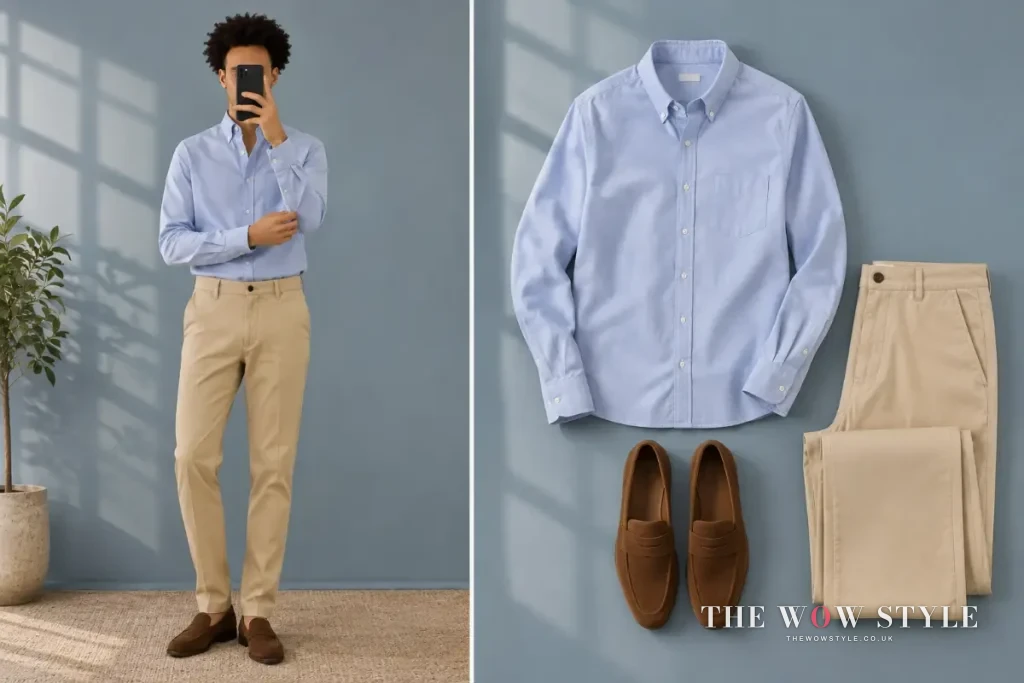
Fit is the single biggest difference between looking styled and looking dressed. A plain piece that sits right on your shoulders and ends in the right place reads as considered; an expensive piece that’s too big or too long reads as borrowed. Before you change anything else, get the fit right.
Two checks catch most problems. On a jacket, shirt or coat, the shoulder seam should sit at the edge of your shoulder — if it droops onto your arm, the whole thing looks a size too big. On trousers, the break (where the hem meets the shoe) should just kiss the top of your shoe, with no pooling of fabric around the ankle. Get those two right and you’re most of the way there.
Here’s the part most people skip: a good alteration is cheaper than a new outfit. Taking in a waist, shortening a hem or narrowing a sleeve costs little and does more for how a piece looks than another trip to the shops. Buy for the shoulders and the chest — the two hardest things to alter — and let a tailor handle the rest.
A quick fit check, head to toe:
| Area | Looks right | Looks off |
| Shoulders | Seam sits at the edge of your shoulder | Seam droops down onto your arm |
| Chest / bust | Fabric lies flat and closed | Buttons strain or the fabric gapes |
| Sleeves | End at the wrist bone | Cover your hand or stop mid-forearm |
| Waist | Stays put at your natural waist | Slides down and needs hitching |
| Trouser hem | Just touches the top of the shoe | Pools at the ankle or floats above it |
Dress for your proportions, not the rules
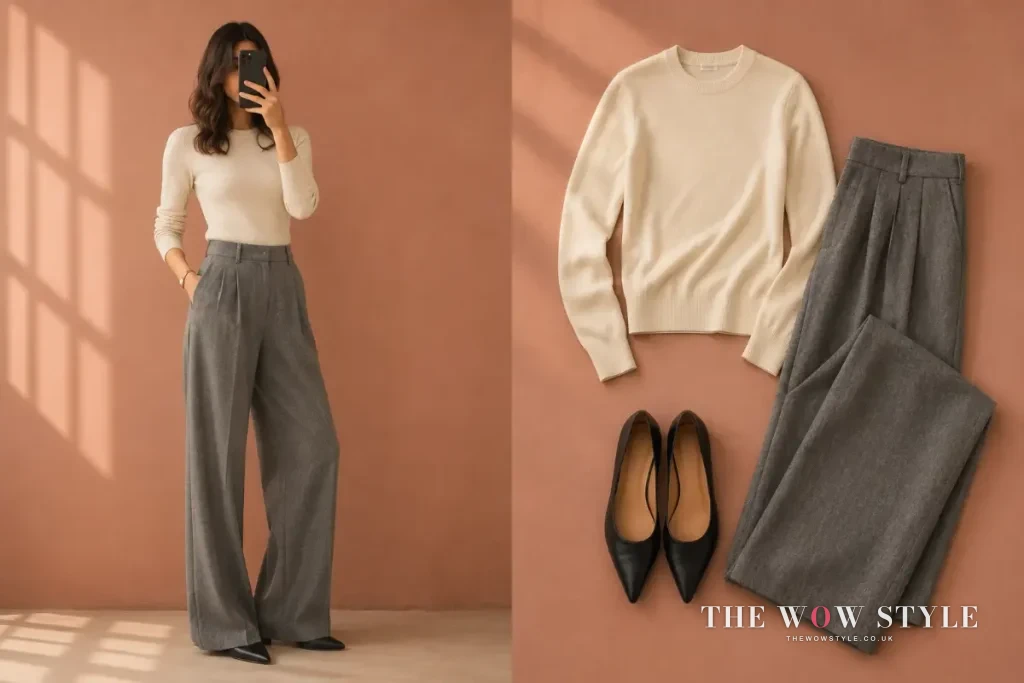
Body-shape “rules” get sold as law — this shape must never wear that, this one has to hide the other. Treat them as a starting point, not a verdict; plenty of people look their best breaking them. The idea worth keeping underneath all of it is balance: pair a looser piece with a fitted one so one part of you stays defined. Wide-leg trousers want a tucked or fitted top. An oversized jumper wants a slim trouser or a hint of leg. When everything is loose, you lose your shape; when everything is tight, there’s nowhere for the eye to rest.
The other lever is where a waistline and a hemline fall. A higher rise and a hem that ends at a slimmer point of the leg lengthen the line of the leg — a visual effect you can use on any body, rather than a rule about which bodies are “allowed” it. Try it, look in a full-length mirror in daylight, and keep what looks good to you.
Keep colour simple: neutrals first, two or three at a time
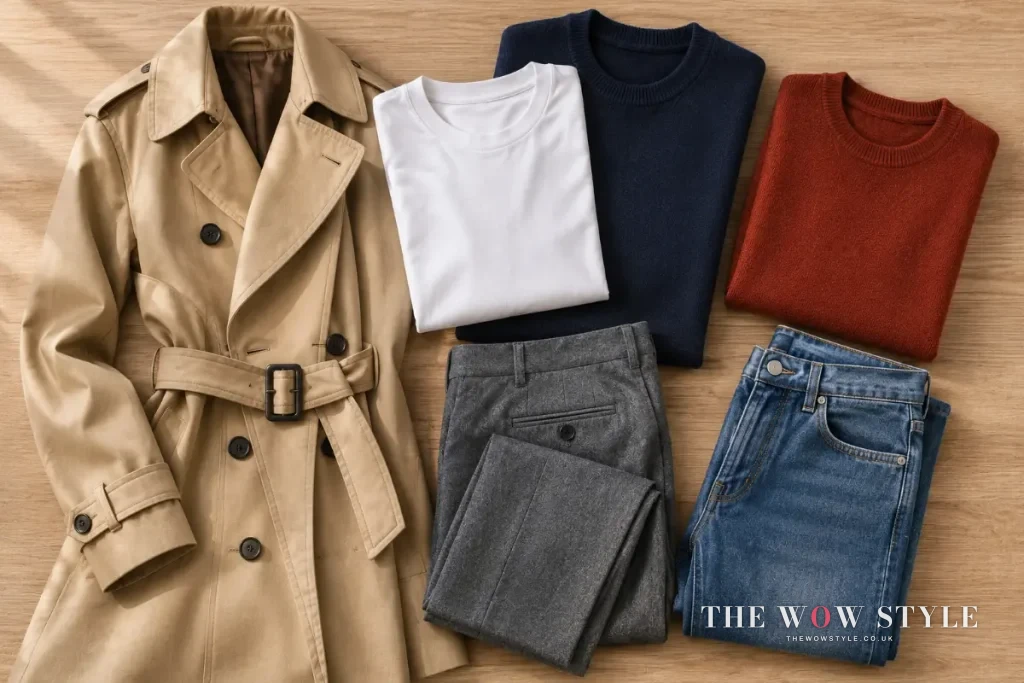
The fastest way to make separate pieces look like an outfit is to limit the colours. Build on neutrals — black, white, navy, grey, beige, brown, denim — because they go with each other and with everything else, then add colour deliberately. A reliable habit is to keep most outfits to two or three colours total, counting your shoes.
When you do add colour, let it be the one thing the eye goes to and keep the rest quiet: a red knit with navy trousers and white trainers, not a red knit with green trousers and yellow shoes. If you’re not sure two colours work together, put them next to a neutral and they usually settle. Colour “seasons” and undertone charts can help you notice what you like near your face, but they’re a tool, not a rulebook — judge the result in daylight.
How to build an outfit (a formula anyone can copy)
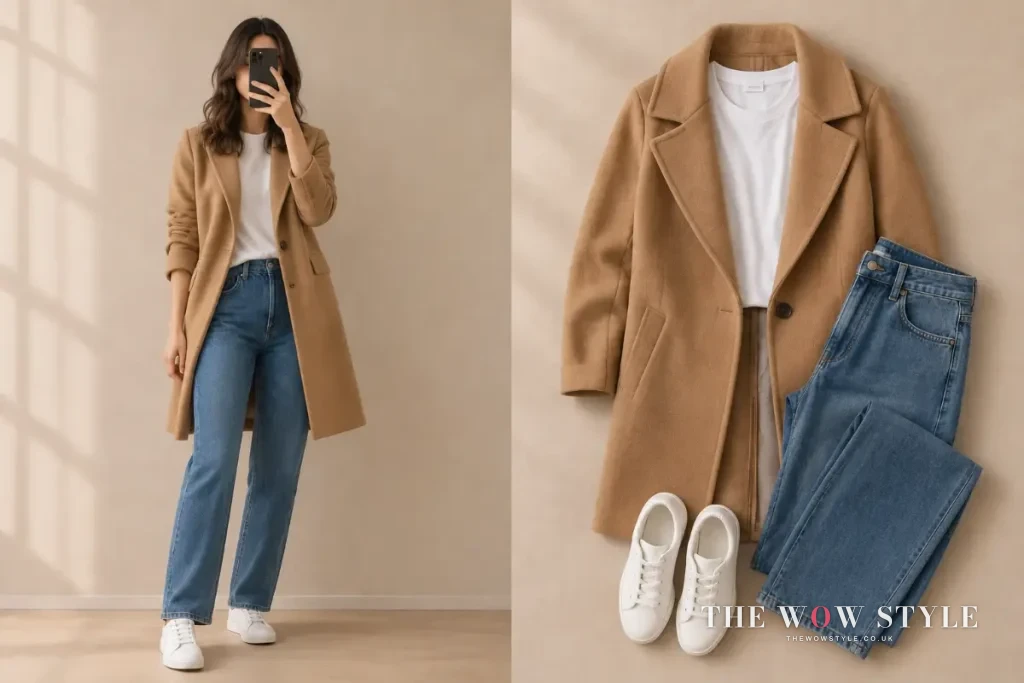
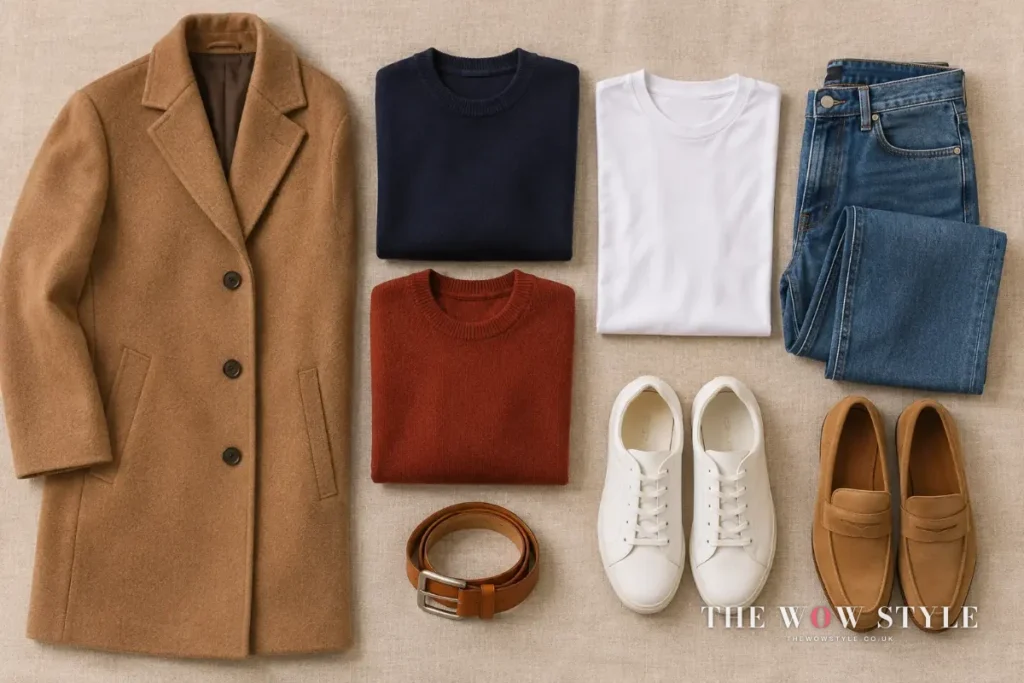
Most good outfits follow the same quiet structure: one anchor piece, supporting neutrals, and a single point of interest. The anchor is whatever you’re trying to wear — a leather skirt, a linen suit, a pair of trainers. Around it go pieces that stay out of the way, and then one thing that finishes it: a belt, a boot, a jacket, a colour.
If starting from scratch feels hard, don’t create — copy. Save ten outfits you genuinely like, from anywhere, and look for what they share: the colours, the proportions, the kind of shoe. That pattern is your taste, and you can rebuild it with what you already own. A plain white tee is the easiest place to practise — our how to style a white T-shirt guide runs fifteen ways to wear one, from jeans to a leather skirt to a slip dress.
Layering is the same idea stacked: a base that fits, a middle layer for warmth or shape, and an outer layer that holds the whole thing together. Keep the layers close in weight and colour and they read as one look rather than three.
Finish with shoes and the small things
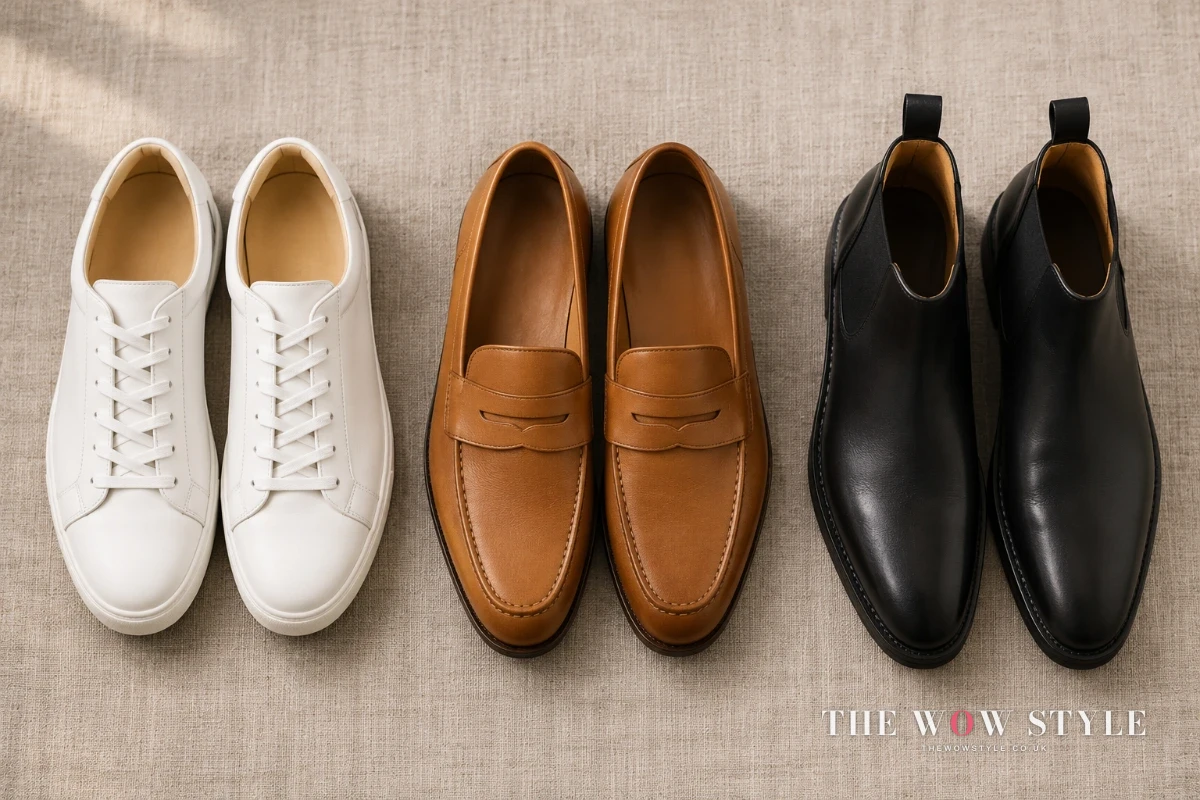
Shoes set the register of an outfit more than any other piece — the same jeans and tee read as weekend with trainers, as smart with loafers, as going-out with a heeled boot. For anything that matters, choose the shoes first and build up to them. A clean pair of white trainers is the most useful starting point either gender can own; our how to style white trainers guide shows how far they stretch, from jeans to tailoring.
After the shoes, keep the details few and intentional. A belt that broadly agrees with your shoes, a watch, one or two pieces of jewellery — enough to look finished, not stacked. If you’re unsure, take one thing off before you leave.
One thing sits under all of it: clean and pressed reads as styled. A creased shirt or a bobbled knit quietly undoes the fit and colour you got right, so pressing a piece often does more for it than buying a new one.
Find your personal style (so you stop guessing)
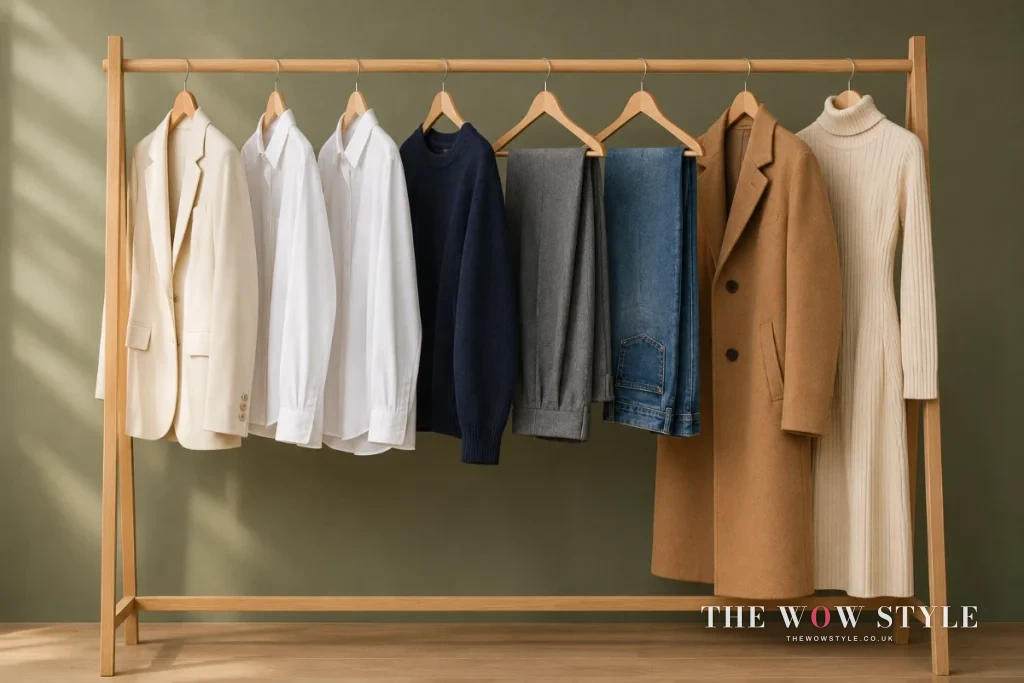
Personal style isn’t a look you’re born with — it’s the set of choices you keep coming back to. Once you’ve noticed the common thread in the outfits you love, give it a couple of plain words — relaxed and neutral, sharp and classic, bold and colourful — and use them as a filter when you shop or get dressed. If a piece doesn’t fit those words or your actual week, it’s not for you, however nice it is.
Match it to your real life, not an imagined one. If you spend your days in jeans, the most stylish wardrobe is the best version of jeans-and-a-good-top, not a rail of occasion wear you never reach for. A small, considered set of pieces you genuinely wear — the thinking behind a capsule wardrobe — beats a full one you don’t.
Your first two weeks
- Week one — fix what you own. Try everything on. Set aside anything that doesn’t fit and book the few worth altering. Pull the pieces you reach for most into one place.
- Week two — build three outfits. Using the formula above, put together three full looks, shoes included, and photograph them. Those three become your defaults on a busy morning, and the habit of building outfits deliberately carries into everything else.
Browse our styling guides
Every principle on this page has a worked example below — one garment, fifteen real outfits, with the fit notes that change how a look sits. Start with a piece you own and wear often.
For women
- How to Style a White T-Shirt for Women: 15 Outfits
- How to Style a Cream Blazer for Women: 15 Outfits
- How to Style a Leather Skirt for Women: 15 Outfits
- How to Style a Linen Suit for Women: 15 Outfits
- How to Style Gladiator Sandals for Women: 15 Outfits
For men
Men & women
More guides are added every week — bookmark this page and check back.
Pick the one piece you wear most, open its guide, and try a single new outfit from it this week. That’s how a wardrobe you already own starts to look like one you planned.
Frequently asked questions
Is styling different for men and women?
The principles are identical — fit first, balanced proportions, a tight colour palette, and the right shoes. Only the pieces change. Every guide on this site is built the same way for both.
How long does it take to get better at styling?
You’ll usually look better within a week, because fixing fit and editing out what doesn’t work is fast. Reaching for good combinations without having to think about it takes a couple of months of putting outfits together on purpose.
What’s the fastest way to look more put-together today?
Three ten-second changes: tuck the front of your top into your waistband, add a belt, and swap to your cleanest pair of shoes. You’ve added shape and intention without touching the clothes themselves.
How do I stop buying clothes I never wear?
Before you buy, name three things you already own that it will go with and one place you’ll wear it. If you can’t do both, leave it on the rail. That single test removes most of the buys that end up unworn.
Can I follow trends and still have my own style?
Yes — treat trends as optional. Run each one through your style words and your real week, then take the shape or colour that suits you and leave the rest. A trend you’ve adapted reads as style; one you’ve copied whole reads as costume.